


The Art of Perfect Rice: Why Hario Rice Cookers Stand Out in Modern Kitchens
Rice is a staple food for billions of people worldwide, yet cooking it perfectly remains a challenge for many. Too often, rice turns out either mushy, undercooked, or unevenly cooked. Hario rice cookers offer a solution that combines traditional Japanese craftsmanship with modern design, making it easier to achieve consistent, fluffy rice every time. This post explores what makes Hario rice cookers unique, their different models, and how they compare to traditional donabe rice cookers.
What Makes Hario Rice Cookers Unique
Hario rice cookers stand out because they focus on simplicity, visibility, and consistency. Unlike many traditional rice cookers or stovetop methods, Hario emphasizes a hands-on, visual cooking experience that removes guesswork.
Glass Lid Cooking
The signature heatproof glass lids allow you to watch the rice as it cooks without lifting the lid. This transparency helps you monitor boiling, steaming, and timing cues visually.
Whistle Indicator on Some Models
Certain Hario models include an audible whistle that signals when to lower the heat. This feature adds a helpful cue for beginners and busy cooks alike.
Simple Ratios
Most Hario rice cookers use a straightforward 1:1 rice-to-water ratio. This removes the need for complicated measurements and adjustments.
Compact and Clean Design
Hario rice cookers blend modern kitchen aesthetics with traditional Japanese cooking roots. Their compact size fits well in small kitchens, and their clean lines complement contemporary décor.
These features make Hario rice cookers especially approachable for everyday use, whether you are a novice or an experienced cook.
Main Types of Hario Rice Cookers
Hario offers several rice cooker styles, each catering to different preferences and cooking needs.
1. Ceramic Donabe (Gohan Gama Series)
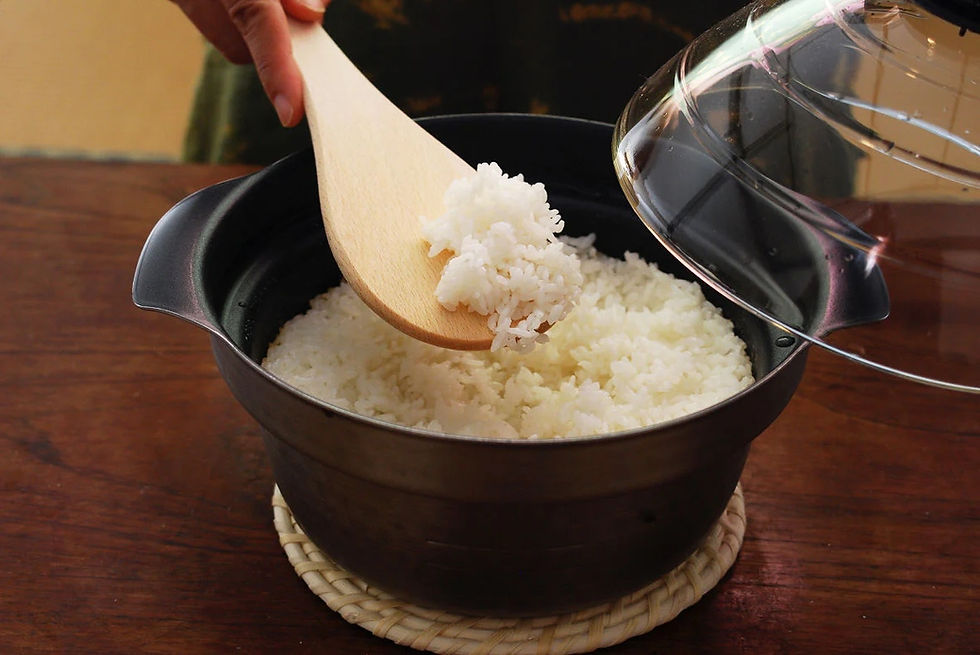
The ceramic donabe is a traditional clay pot rice cooker that excels in heat retention and far-infrared cooking. This method produces rice that is fluffy, slightly sweet, and with well-defined grains. The ceramic base mimics the classic Japanese donabe experience, prized for its authentic texture and flavor.
Best for: Those who want an authentic Japanese rice cooking experience with excellent performance.
2. Stainless Steel Rice Cooker
Hario’s stainless steel models feature a durable body combined with the signature glass lid. These cookers heat up faster than ceramic models and are lighter and more resistant to damage, making them ideal for daily use.
Best for: Practical cooks who want a sturdy, easy-to-clean rice cooker without sacrificing quality.
3. Glass Lid Systems (All Models)
Every Hario rice cooker includes the hallmark glass lid, which lets users visually track the cooking process. Watching the boiling, steam levels, and timing cues helps reduce the intimidation often associated with stovetop rice cooking.
Why it matters: This visual feedback builds confidence and helps cooks learn the perfect timing for their rice.
How Hario Rice Cookers Compare to Traditional Donabe Rice Cookers
Traditional donabe rice cookers use a double-lid system and require more technique to master. They retain steam pressure better, which can create a richer texture and deeper flavor in the rice. However, they also demand more attention and experience.
Hario rice cookers simplify this process by offering:
Easier learning curve
Visual and audible cues guide you through cooking without guesswork.
More “set-and-adjust” cooking
You add rice and water, bring it to a boil, then lower heat based on cues, making it more accessible.
Traditional donabe cooking rewards skill and patience, while Hario rice cookers prioritize consistency and ease, making them ideal for busy modern kitchens.
Cooking Experience with Hario Rice Cookers
Using a Hario rice cooker is straightforward and satisfying. The process typically involves:
Adding rice and water using the simple 1:1 ratio.
Heating on the stove while watching the rice through the glass lid.
Listening for the whistle (if your model has one) or observing steam levels to know when to lower the heat.
Allowing the rice to steam until fully cooked, then serving.
This hands-on approach connects you with the cooking process without overwhelming you. It also encourages experimentation with different rice types or water ratios, knowing you can see and hear what’s happening.
Cooking Rice in a Hario Rice Cooker
Ingredients and Preparation
Rice & Water Ratio
1 to 1½ cups uncooked rice
Equal amount of water
Preparation
Rinse rice until water runs mostly clear
Add rice and water to the donabe
Soak for 10 minutes
Cooking
Place donabe over medium heat
Heat until pot whistles
About 10-12 minutes
Resting
Turn off heat
Let rest, covered, for 10 minutes
Finish
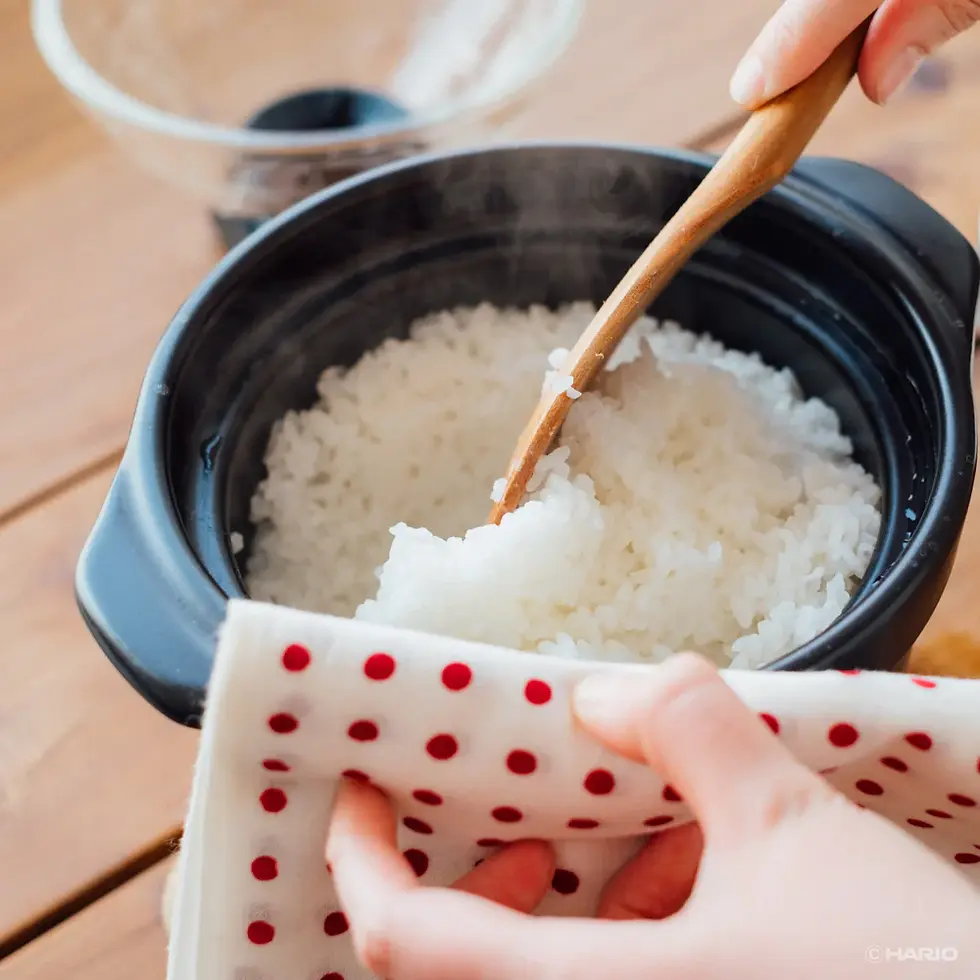
Gently fluff rice with a paddle before serving
Practical Tips for Using Hario Rice Cookers
Rinse your rice well before cooking to remove excess starch and improve texture.
Use the glass lid to monitor the transition from boiling to steaming; this is key to perfect rice.
Adjust heat carefully after the whistle or when steam reduces to avoid burning or undercooking.
Let rice rest for a few minutes after cooking to allow moisture to distribute evenly.
Experiment with different rice varieties like short-grain, jasmine, or brown rice to find your favorite.
Why Choose Hario for Your Kitchen
Hario rice cookers offer a unique blend of tradition and modern convenience. Their transparent cooking method demystifies stovetop rice, making it accessible for cooks of all skill levels. The durable materials and elegant design fit well in any kitchen, while the simple ratios and cues ensure consistent results.
Whether you want the authentic feel of ceramic donabe or the practicality of stainless steel, Hario has a model that suits your lifestyle. The ability to watch your rice cook and hear when to adjust heat takes the stress out of rice cooking and delivers perfect results every time.


Comments