


Toban-Yaki Grill: Japanese Ceramic Grilling from Stove to Table
Discover How a Toban-Yaki Grill Brings Grilling, Browning, Steaming & Serving Together
A Toban-Yaki Grill brings a distinctive style of Japanese cooking to the home kitchen. Made from heat-retaining ceramic, the shallow cooking plate allows ingredients to brown and cook directly on its surface, while the fitted ceramic lid creates an enclosed environment for steaming and gentle finishing.
Unlike a conventional metal frying pan, ceramic absorbs and retains heat, allowing food to continue cooking even after the heat is reduced or turned off. The same attractive ceramic vessel can then move directly from the stove to the table.
From beef and salmon to shrimp, mushrooms and seasonal vegetables, a Toban-Yaki Grill makes it possible to brown, sauté, deglaze, steam, glaze and serve in one vessel.

What Is a Toban-Yaki Grill?
The Japanese word toban (陶板) means ceramic plate. Toban-yaki (陶板焼き) refers to foods cooked or grilled on that heated ceramic plate.
Toban cooking is particularly well suited to foods that benefit from direct heat while remaining tender and juicy. Meat, seafood, mushrooms and vegetables can be cooked individually or combined into complete dishes.
A Toban-Yaki Grill with a fitted ceramic lid expands those possibilities. Cook uncovered when you want browning and evaporation; add the lid when you want to retain heat and moisture.
The result is versatile Japanese cookware that functions as both a cooking vessel and serving dish.
How a Toban-Yaki Grill Works
Ceramic behaves differently from stainless steel, aluminum or cast iron. It takes time to absorb heat, but once heated, it retains that heat exceptionally well.
That creates several advantages in cooking:
Steady heat helps ingredients cook evenly.
Direct contact with the ceramic allows meat, seafood, mushrooms and vegetables to brown.
Heat retention continues cooking after the burner is lowered or turned off.
The fitted lid traps heat and moisture for covered cooking.
The shallow surface makes ingredients easy to arrange, turn and serve.
Stove-to-table design keeps food warm while it is being served.
Rather than relying on very high heat, Toban-Yaki Grill cooking is about controlled heat and building flavor in stages.

Why the Donabe-Style Lid Matters
The lid is one of the most useful features of this style of Toban-Yaki Grill.
Without the lid, the ceramic plate works much like a shallow grill or sauté pan. Ingredients can brown, caramelize and release moisture.
Covering the toban changes the cooking environment. Heat and moisture become trapped inside, allowing ingredients to finish more gently.
This makes it possible to move between cooking techniques without changing cookware:
Brown → Deglaze → Cook → Cover → Finish → Serve
For example, salmon can first be cooked directly on the ceramic and removed. Mushrooms can then be browned in the flavorful cooking juices before vegetables and sauce are added. The salmon can be returned to the toban and covered briefly to finish.
The lid isn't simply for keeping food warm—it gives the cook another way to control heat, moisture and texture.
Cooking with Low to Medium Heat
A Toban-Yaki Grill does not need the intense heat often associated with grilling.
Use low to medium heat and allow the ceramic to heat progressively as you cook. Because ceramic retains heat well, increasing the burner unnecessarily can result in ingredients cooking too quickly or sticking and burning.
For many dishes:
Add oil and ingredients to the toban.
Begin over low or medium-low heat.
Allow the ceramic and ingredients to heat together.
Increase toward medium heat when additional browning is needed.
Reduce the burner once the ceramic has accumulated sufficient heat.
Use residual heat to help finish the dish.
Avoid treating the toban like a metal skillet that needs to be heated until extremely hot before food is added.
Browning Builds Flavor
One of the most useful techniques with a Toban-Yaki Grill is allowing ingredients to develop color directly against the ceramic surface.
Mushrooms are particularly good examples.
Maitake, shiitake, king oyster and other mushrooms become more intensely savory as moisture evaporates and their surfaces brown. Maitake's thin edges can become lightly crisp and develop roasted, nutty notes.
The same principle applies to salmon, shrimp, chicken and beef.
Instead of placing all the ingredients into the toban at once, consider cooking in stages. Brown the ingredient that benefits most from direct contact first, remove it if necessary, and then continue building the dish.

Deglazing a Toban-Yaki Grill
After browning meat, seafood, garlic or mushrooms, flavorful caramelized bits may remain on the ceramic surface.
Rather than leaving that flavor behind, a small amount of liquid can be used to deglaze the toban.
Sake is particularly useful in Japanese cooking.
Pour the sake over the browned areas of the cooking surface. As it heats, gently loosen the caramelized bits and move the ingredients through the liquid so those concentrated flavors become part of the dish.
The liquid can then be allowed to reduce before the next ingredients are added.
This creates an effective flavor-building progression:
Brown → Deglaze → Reduce → Continue Cooking
Deglazing is a cooking technique that works particularly well with the Toban-Yaki Grill; it should not be confused with a defining traditional requirement of toban-yaki itself.
Cook Ingredients in Stages
One of the lessons we've learned from cooking repeatedly with a Toban-Yaki Grill is that when ingredients enter the toban matters.
Adding everything at once can cause vegetables to release water before meat or mushrooms have had an opportunity to brown.
Instead, consider texture and cooking time.
Meat & Seafood
Salmon, shrimp, chicken and thinly sliced beef benefit from direct contact with the ceramic. Depending on the recipe, they can be partially cooked and removed while the remaining ingredients are prepared.
Mushrooms
Maitake, shiitake and king oyster mushrooms benefit from time against the cooking surface. Allow them to brown before adding vegetables that release significant moisture.
Firm Vegetables
Asparagus, leeks, bok choy stems and similar vegetables can follow the mushrooms, giving them time to cook while retaining texture.
Tender or High-Moisture Vegetables
Napa cabbage, bok choy leaves and other tender vegetables should generally enter later. They cook quickly and release moisture that can help transition the dish from browning to covered cooking.

Use the Lid to Control Moisture
Once ingredients have developed the desired color, adding a sauce or small amount of liquid and covering the toban creates a completely different cooking environment.
The lid traps moisture released by the ingredients and creates gentle steam.
This is particularly useful for:
Finishing partially cooked salmon or chicken
Tenderizing vegetables
Cooking shrimp gently
Integrating miso or soy-based sauces
Bringing separately cooked ingredients back together
Because the ceramic itself retains considerable heat, covered cooking can often be brief.
Check the food rather than relying exclusively on time.
Uncover to Reduce & Glaze
The lid can come off again before serving.
If vegetables have released more moisture than desired, cook the dish uncovered briefly. The excess liquid will evaporate and flavors will become more concentrated.
Soy sauce, miso sauce or another finishing seasoning can then coat the ingredients rather than becoming diluted in excess liquid.
This gives you another useful sequence:
Cover & Cook → Uncover → Reduce → Glaze
A small amount of butter can also be incorporated at this stage when appropriate, although it should complement rather than overwhelm the other flavors.

What Can You Cook on a Toban-Yaki Grill?
The versatility of the Toban-Yaki Grill is one of its greatest advantages.
Beef
Thinly sliced beef, steak and Wagyu are natural choices. Cook the meat directly against the ceramic and pair it with mushrooms, scallions, ponzu, garlic, soy sauce or seasonal vegetables.
Chicken
Boneless chicken thighs work particularly well because they remain juicy while developing color against the ceramic. Shio koji, miso, teriyaki and simple sake-soy preparations are all possibilities.
Salmon & Other Fish
Salmon's natural fat works particularly well with ceramic cooking. Miso, sake, ginger, mushrooms, leeks and seasonal vegetables can turn it into a complete one-vessel dish.
Shrimp & Seafood
Shrimp cooks quickly and pairs naturally with garlic, sake, mushrooms, bok choy, soy sauce and butter. Scallops, clams and other seafood can also benefit from gentle covered cooking.
Mushrooms
Maitake, shiitake, king oyster, oyster and beech mushrooms are particularly well suited to toban cooking. Browning intensifies their flavor and gives them a texture that can be lost when they are simply steamed.
Vegetables
Napa cabbage, bok choy, asparagus, leeks, eggplant, onions, corn and other seasonal vegetables can be cooked alone or alongside proteins.

A Simple Toban-Yaki Grill Cooking Method
While every recipe is different, this framework works well for many dishes:
1. Prepare the TobanMake sure the exterior of the toban is completely dry. Add oil as required by the recipe.
2. Begin CookingCook over low to medium heat, allowing the ceramic to gradually accumulate heat.
3. BrownGive proteins or mushrooms enough direct contact with the ceramic to develop color and concentrated flavor.
4. Remove When NecessaryPartially cooked proteins can be temporarily removed while other ingredients cook.
5. DeglazeAdd a small amount of sake or other cooking liquid to loosen flavorful browned bits when appropriate.
6. Add Vegetables in StagesStart with ingredients that require longer cooking and finish with tender, moisture-rich vegetables.
7. Add Seasoning or SauceIntroduce miso, soy sauce, mirin, sake or other seasonings according to the recipe.
8. CoverUse the ceramic lid when gentle steaming or finishing is needed.
9. Uncover & FinishReduce excess liquid, glaze the ingredients and adjust the final seasoning.
10. ServeTurn off the heat and bring the Toban-Yaki Grill directly to the table on an appropriate heat-resistant surface.
Toban-Yaki Grill Care
Ceramic cookware rewards a little care.
Make sure the exterior is completely dry before heating.
Use low to medium heat rather than unnecessarily high heat.
Avoid sudden temperature changes.
Never place a very hot toban or lid onto a cold or wet surface.
Do not pour cold water onto hot ceramic.
Allow the toban to cool naturally before washing.
Hand wash after cooling and dry thoroughly before storing.
Avoid deep-frying in the toban.
Because the ceramic retains heat after leaving the burner, always handle it as hot cookware and protect the table beneath it.

Toban-Yaki Grill vs. a Conventional Frying Pan
Both can sauté and brown food, but the cooking experience is different.
A metal frying pan generally responds quickly when the burner is raised or lowered. A ceramic toban changes temperature more gradually and retains accumulated heat longer.
The Toban-Yaki Grill also offers something most frying pans don't: cooking and presentation in the same vessel.
Instead of transferring the finished dish to serving ware, the toban becomes part of the dining experience.
That is especially appealing for dishes intended to be shared at the table.
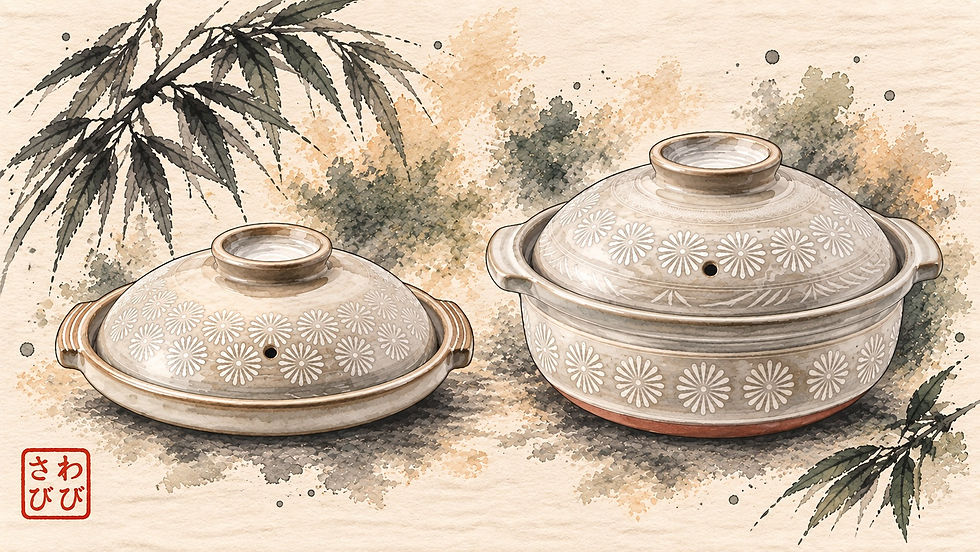
Toban-Yaki Grill vs. Donabe
Both are forms of Japanese ceramic cookware, but their shapes encourage different cooking styles.
A traditional donabe's deeper body makes it particularly well suited to rice, soups, hot pots, braises and other liquid-based preparations.
The Toban-Yaki Grill's wide, shallow cooking surface emphasizes direct contact with the ceramic, making it particularly useful for grilling, browning and sautéing.
With the addition of its ceramic lid, it can transition from direct cooking to gentle covered cooking.
They are complementary pieces of Japanese cookware rather than substitutes for one another.
From Kitchen to Table
Perhaps the simplest way to understand a Toban-Yaki Grill is that the cooking doesn't end when the burner turns off.
The ceramic continues holding heat, the ingredients remain warm, and the cooking vessel becomes the serving vessel.
Place the hot toban on an appropriate trivet and bring the entire dish to the table.
It is an approach that reflects something we particularly appreciate about Japanese cookware: function and presentation don't need to be separate.
Toban-Yaki Grill: Frequently Asked Questions
What does toban-yaki mean?
Toban (陶板) means ceramic plate, while yaki (焼き) refers to grilling or cooking with heat. Toban-yaki describes food cooked on a heated ceramic plate.
Does a Toban-Yaki Grill need high heat?
No. Low to medium heat is appropriate for the style of Toban-Yaki Grill described here. The ceramic gradually absorbs heat and retains it well, so very high heat is unnecessary.
Can you brown food on a Toban-Yaki Grill?
Yes. Meat, seafood, mushrooms and vegetables can develop browning through direct contact with the heated ceramic surface.
Can you deglaze a Toban-Yaki Grill?
Yes. A small amount of sake or another appropriate cooking liquid can loosen browned bits remaining after cooking. Those concentrated flavors can then be incorporated back into the dish.
Why use the lid?
The lid traps heat and moisture. This allows you to brown ingredients uncovered and then transition to gentle steaming or covered finishing without changing cookware.
Can a Toban-Yaki Grill go directly to the table?
Yes. One of its advantages is stove-to-table cooking. Always place the hot ceramic on a suitable heat-resistant trivet or surface.
What foods work best?
Beef, chicken, salmon, shrimp, mushrooms and vegetables are excellent starting points. Toban-yaki is particularly useful when a recipe combines ingredients that benefit from both browning and gentle covered cooking.

Discover Toban-Yaki Cooking at Home
A Toban-Yaki Grill brings together cooking and serving in one beautifully simple piece of Japanese cookware. From browning mushrooms and grilling beef or seafood to finishing vegetables under the ceramic lid, it offers an approachable way to explore Japanese cooking techniques at home.
Visit Wabi Sabi Japan Living to discover our Toban-Yaki Grills, explore Japanese cookware and ingredients, and learn how to bring the flavors and techniques of Japan into your own kitchen.
Learn. Taste. Discover.


Comments